Why Your Book Feels Like It’s Going Backwards
Most people don’t struggle to finish a novel because they lack discipline.
They struggle because they don’t know whether they’re actually making progress.
Because progress doesn’t look the same every day.
- Some days it’s 2,000 new words.
- Some days it’s solving a plot hole that’s been quietly breaking everything.
- Some days it’s trimming 8k off a bloated manuscript.
- And sometimes it’s deleting your entire first act and avoiding a manic episode.
It all counts as progress. Unfortunately leaning on the delete key rarely feels that way.
The problem is that writing a novel isn’t one task. It’s a sequence of different tasks wearing your Google Doc as a trench coat.
Which makes it too big, and too vague, to track in your head.
This Only Works If You Break It Apart
The only way this starts to make sense is if you stop treating it like one task.
A novel becomes much easier to manage when you break it into phases—each with a clear objective, and something concrete you can measure.
You’re not trying to “finish a novel.”
You’re trying to:
- finish a draft
- shape that draft into something that works
- and then refine it into something worth reading
Each of those is a different problem.
And once you treat them that way, progress becomes a lot easier to track.
Why Progress Tracking Matters
Tracking matters because writing a novel is a long project—longer than most people expect.
A first draft can take months. Revisions and edits can easily stretch that into a year or more. Even established authors can spend multiple years getting a book from idea to publication.
If the only thing you’re measuring is “finished book”, the target is too far away to be useful.
Breaking that into smaller milestones and tracking against those gives you something you can actually see ahead of you.
And once you can see it, you can set a deadline for it.
Finish the draft in six weeks. Get revisions done in eight.
Now you’re not working toward a vague end point—you’re working toward something you can actually hit. And more importantly, actually hit.
What I Track at Each Stage
I don’t track everything.
I track the few things that tell me whether I’m making progress in the stage I’m actually in.
Each phase has a different objective. So each one needs different signals.
If you track the wrong thing, you either get a false sense of progress, or none at all.
Drafting
The objective at this phase is to find out whether the idea can actually sustain a full story.
At this stage, you’re not trying to write something good. You’re trying to prove there’s enough there to become something good.
For that reason, the measurement is simple.
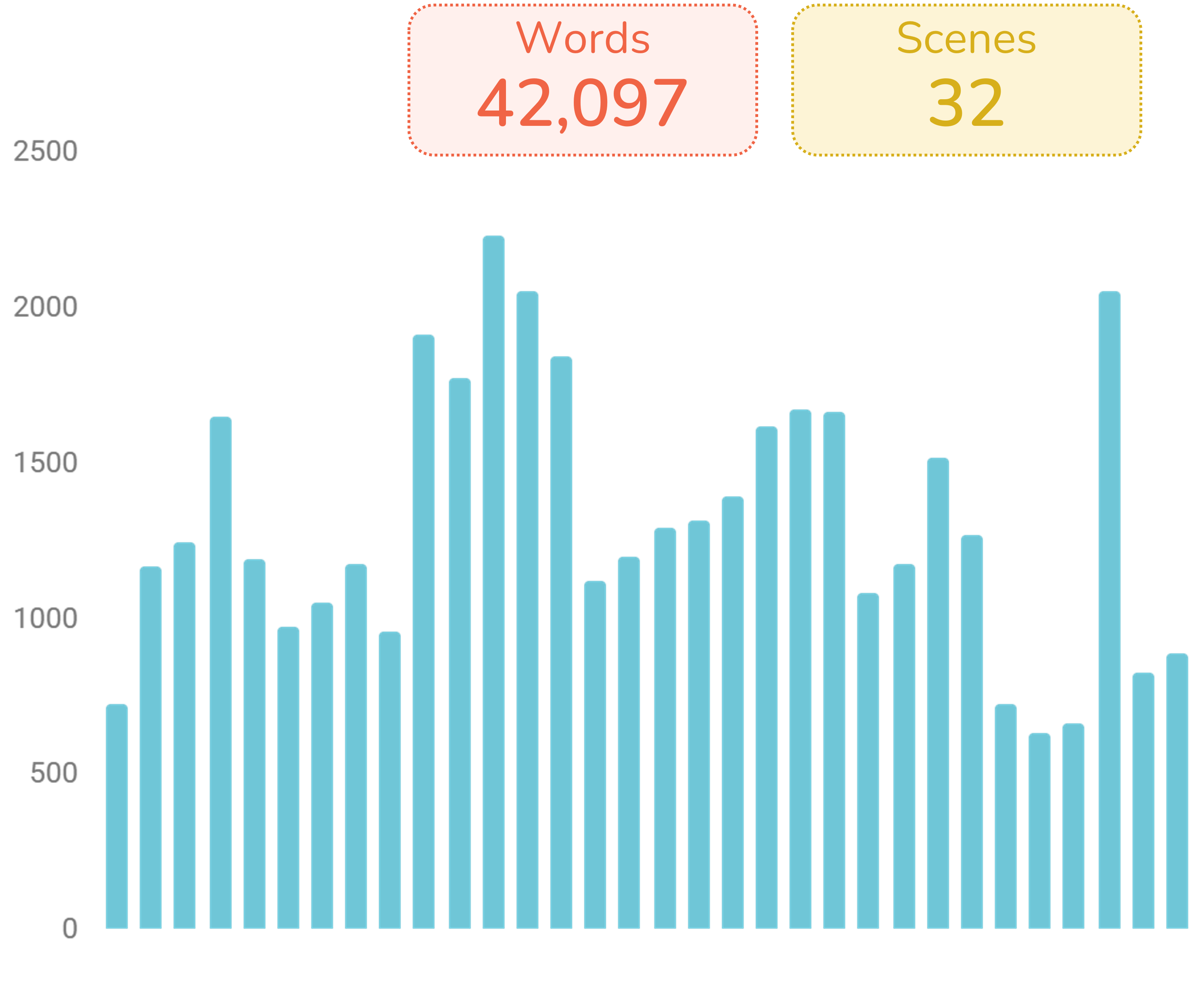
Word count
At 10k words, you have a premise.
At 20k, you might have the start of a story.
At 40k, it either begins to resemble something with shape—or it starts to fall apart.
Scene / Chapter count
30k words across 8 scenes tells a very different story from 30k across 18.
I’m essentially answering one question:
Does the idea expand when I push it, or am I stretching something that isn’t really there?
Revisions
At this point, you might have a 70k draft with 40 scenes. The question now isn’t whether there’s a story, it’s whether that story holds together, and flows smoothly.
This is where you’re fixing pacing and structure. Making sure the right parts are doing the right amount of work.
I’m still keeping an eye on word count and scene count. But now I’m looking at how that weight is distributed.
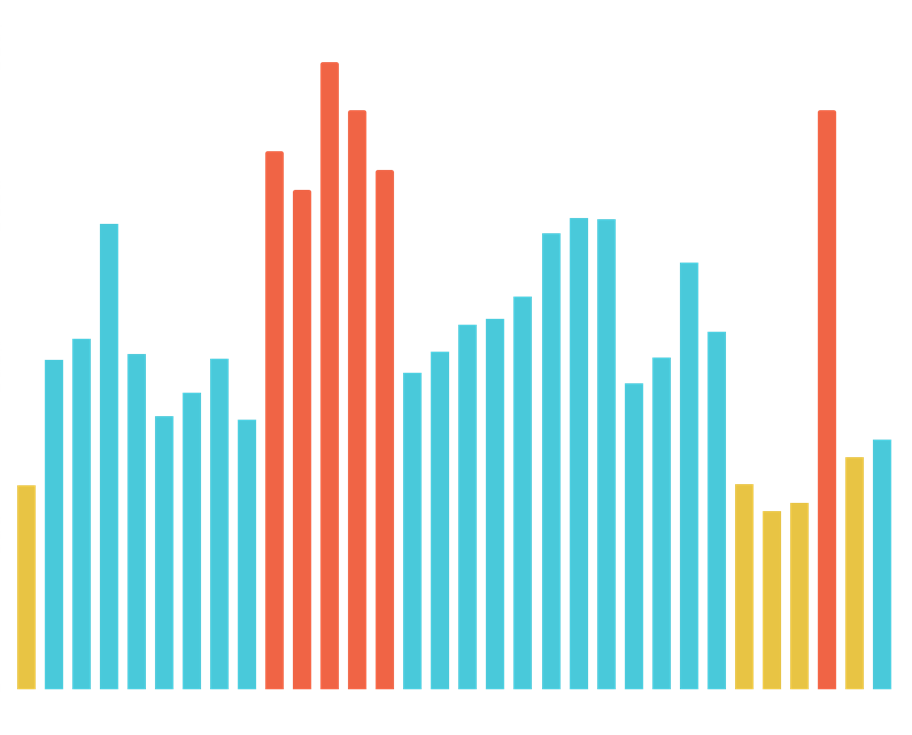
Word count per scene
Are some scenes barely there?
Are others quietly turning into 6k+ word detours?
That imbalance usually shows up as pacing problems.
Distribution
Act 2 carries a lot of longer scenes stacked together, followed by shorter ones trying to catch up.
My middle was dragging, followed by a rush to the climax that was jarring.
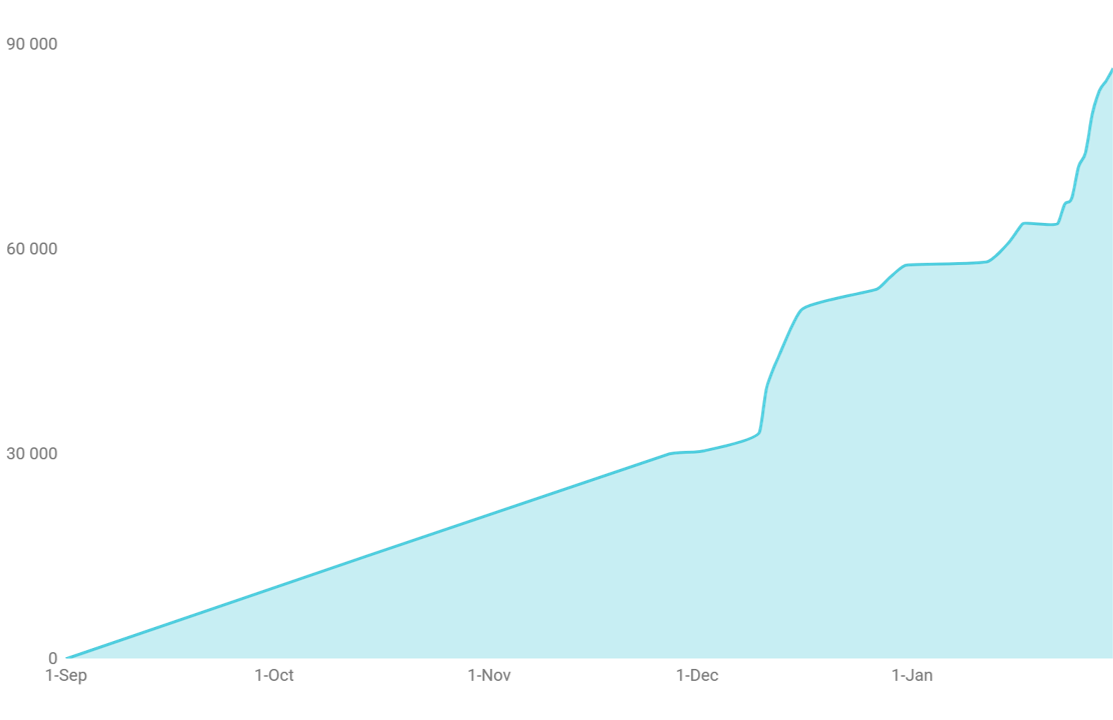
Words Per Day
Word count tells you if the draft is growing.
Words per day tells you how you’re actually working.
I started tracking my words per day at about 30k words. My first 30k took 87 days. That’s about 345 words a day.
The next 56k words took 30 days.
Tracking words per day pushed my average to ~1,900.
This all lived in a spreadsheet at the time. It took a bit of effort to set up, but I found it surprisingly satisfying to update after each session. Odyssey handles it for me now.
Editing: Trim Pass
After rewriting the entire first act, my word count drifted to 115k, somewhat presumptuous for an author nobody’s heard of.
The purpose of this phase was to cut down as close to 100k as possible.
What I track

Word count of scenes before / after
How much is actually being removed.
Words cut / Projected final word count
Am I making meaningful progress, or just shaving lines? If I keep trimming like this, where do I land?
I started at ~115k, aiming for 105k.
Early on, it was clear I wasn’t getting there. At best, I was trending toward ~110k.
Which told me I wasn’t going to get there cutting sentences.
My average scene was ~2.5k words.
So to close the gap, I needed to cut roughly two full scenes.
Not trim them. Remove them.
The Work You Can’t Measure: Plotting, Revisions and Polish
Not everything in writing is easy to track.
Plotting. Fixing structure. Polishing sentences. Some of the most important work doesn’t show up cleanly in numbers.
The objective here isn’t volume.
It’s resolution.
- Is the plot problem solved?
- Does the scene now work?
- Is the chapter clearer than it was before?
Set clear, manageable goals and deadlines—and don’t move on until they’re resolved.
You don’t need to feel like you’re making progress. You need to be able to see it.